
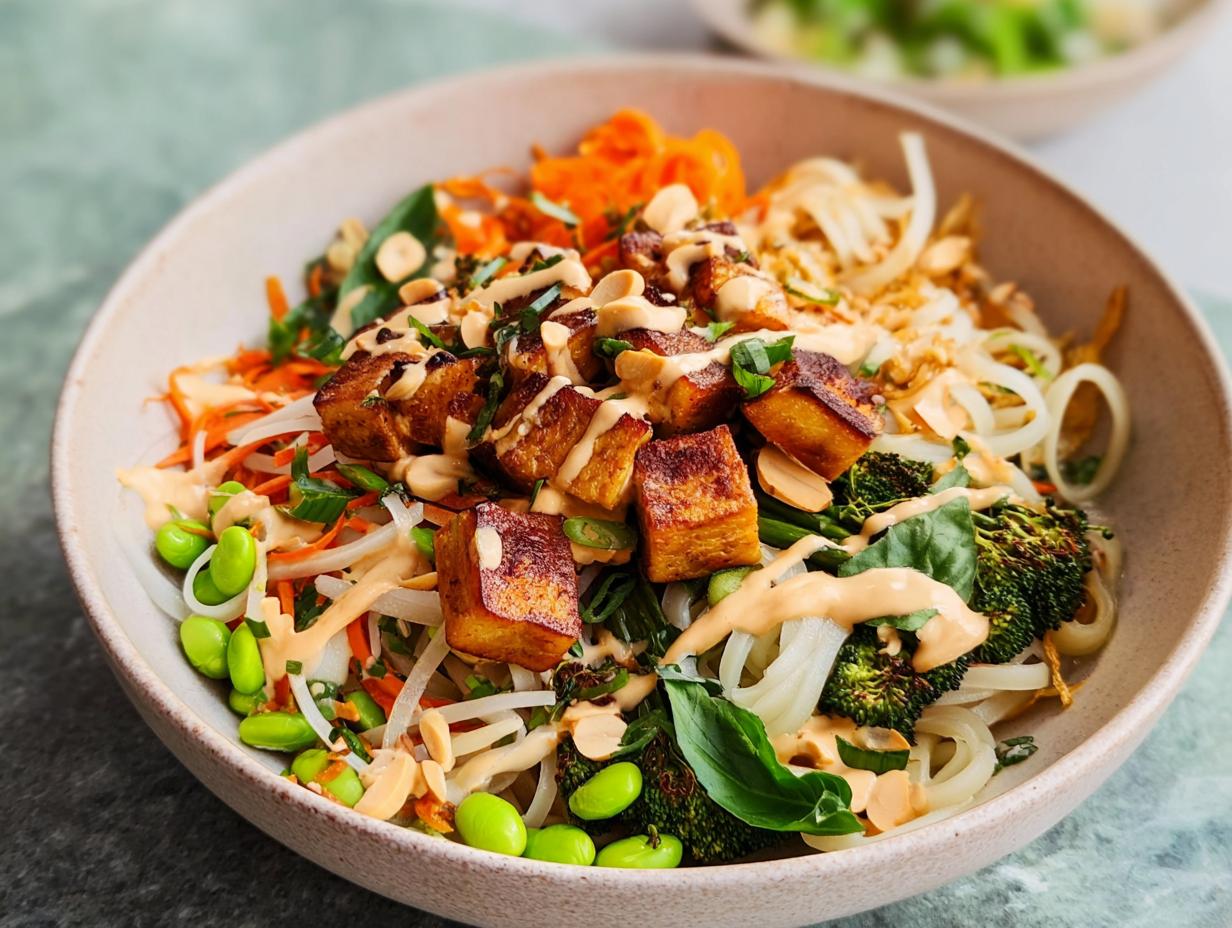
Weeknight dinners. Ugh, right? You’re tired, you’re hungry, and the last thing you want is some complicated recipe that means more dishes than a professional kitchen. I totally get it! That feeling of desperation when you’re staring into the fridge, hoping for a miracle? I’ve been there. One night, totally beat after work, I just threw a bunch of stuff together into a bowl, drizzled some sauce on it, and… wow! It was amazing, and so easy. That’s how my love affair with rice bowls began. They’ve become my secret weapon for delicious, fuss-free meals. And that’s exactly what these 20-Ingredient Rice Bowls Recipes (No Fuss) are all about – taking random ingredients and turning them into something spectacular without breaking a sweat.
Why You’ll Love These 20-Ingredient Rice Bowls Recipes (No Fuss)
Seriously, this recipe is a lifesaver! Here’s why you’ll be making these 20-Ingredient Rice Bowls Recipes (No Fuss) again and again:
- Super Simple: Minimal chopping, straightforward steps, and your blender does most of the heavy lifting for the sauce.
- Packed with Flavor: That creamy peanut sauce? Oh my goodness. It’s addictive, and it makes whatever you put in the bowl taste incredible.
- Lightning Fast: From fridge to table in under an hour, perfect for those crazy weeknights when time is tight.
- So Versatile: Don’t have broccolini? Swap it! Like more spice? Add some chili flakes! These bowls are super forgiving and easy to customize.
Gather Your Ingredients for 20-Ingredient Rice Bowls Recipes (No Fuss)
Okay, let’s get our goodies together for these amazing 20-Ingredient Rice Bowls Recipes (No Fuss). Seriously, just having everything prepped before you start makes life SO much easier. We’ll break it down into the sauce and then what goes into the bowls. Trust me, it’s less scary than it sounds!
For That Dreamy Peanut Sauce:
This is where all the magic happens! We’re talking:
- A nice 1-inch piece of fresh ginger, all peeled.
- Just 1 clove of garlic, also peeled.
- About 1/2 cup of natural creamy peanut butter (the kind you have to stir is best!).
- 3 tablespoons of soy sauce or tamari.
- 3 tablespoons of rice vinegar or lime juice – whatever you have handy!
- 3 tablespoons of water, plus a little extra if it gets too thick.
- A little sweetness: 2 teaspoons of maple syrup.
- And for that nutty depth, 1 teaspoon of toasted sesame oil.
Into the Bowls We Go:
This is where you can totally play around, but here’s a fantastic starting point:
- 1 package of extra-firm tofu (about 14-16 ounces), pressed and cut into cubes.
- 1 tablespoon of soy sauce or tamari for the tofu.
- A pinch of 1/4 teaspoon Kosher salt and 1/4 teaspoon freshly ground black pepper for the tofu.
- I love using 2 small bunches of broccolini (around 1 pound), trimmed.
- About 1 pound of rainbow carrots (or any carrots!), peeled and cut into 2-inch pieces.
- A generous little handful of 1/2 cup fresh basil leaves.
- For crunch, about 1/4 cup unsalted roasted peanuts.
- You’ll want 2 medium scallions, thinly sliced for that fresh oniony bite.
- And for roasting, 2 tablespoons of avocado or olive oil.
- Now for the base! We need 1 1/2 pounds of kohlrabi noodles (check out the recipe notes for tips on this!).
- About 1 cup of shelled edamame (thawed if frozen).
- And a sprinkle of 1/4 cup unsweetened toasted coconut flakes for a little surprise.
Don’t forget to peek at the recipe notes for info on those kohlrabi noodles!
Step-by-Step Guide to Making Your Rice Bowls
Alright, let’s get cooking! This is where the magic happens and your kitchen starts smelling amazing. Don’t worry, it’s all super straightforward, and you’ll have a gorgeous, healthy bowl in no time. It’s honestly more about just putting delicious things together than actual complex cooking! For more one-pot wonders, check out these easy one-pot low-carb meals. And if you’re on the hunt for more bowl inspiration, you might like these one-bowl meal ideas.
Crafting the Flavorful Peanut Sauce
First up, that dreamy sauce! Grab your blender and toss in that peeled ginger and garlic. Give it a whirl until it’s nice and minced. Now, add in the peanut butter, soy sauce, rice vinegar (or lime juice!), water, maple syrup, and sesame oil. Blend it all up until it’s wonderfully smooth. If it looks a bit too thick, just add another tablespoon of water at a time until it’s how you like it – creamy and pourable!
Preparing the Tofu and Vegetables
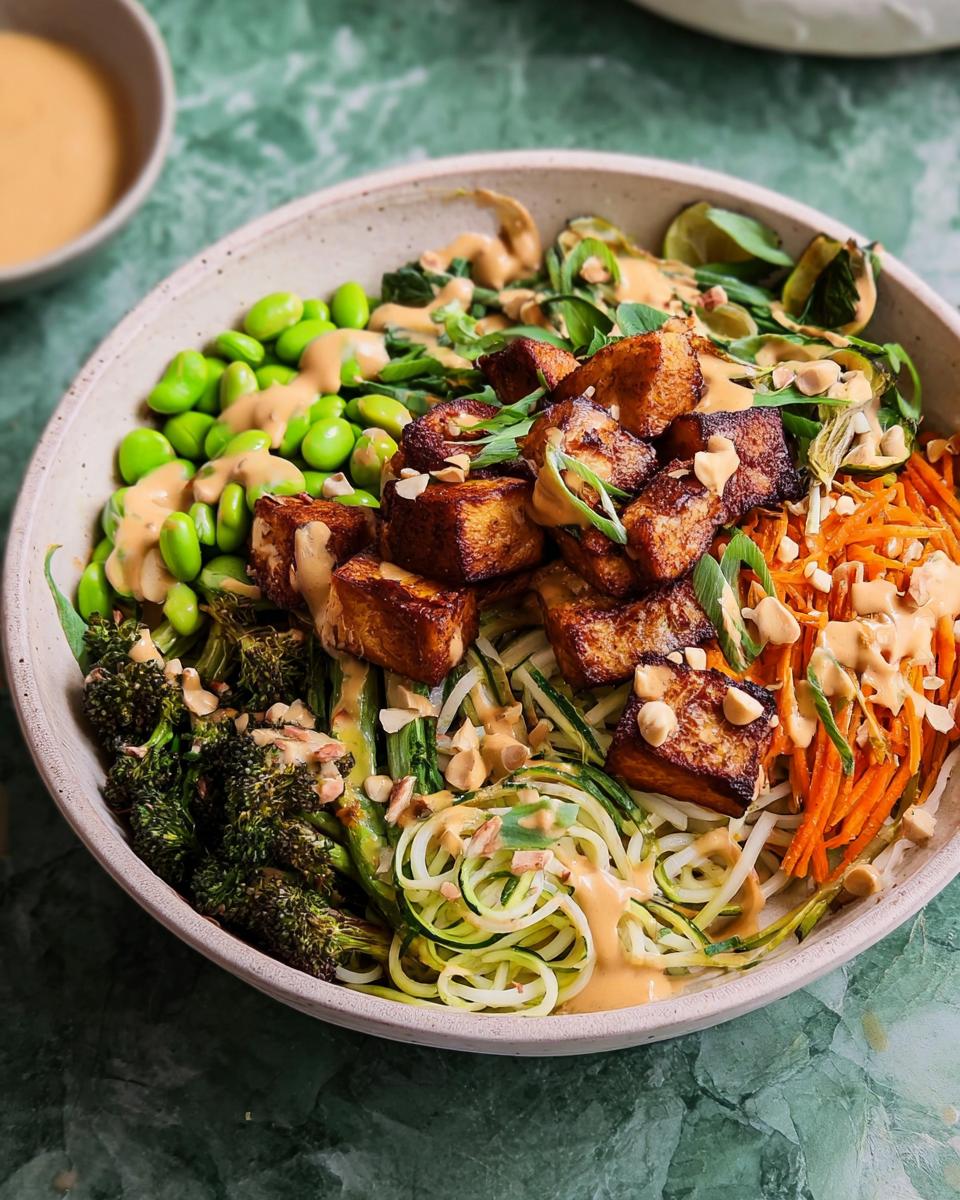
Next, let’s get the good stuff ready for the oven. In a bowl, gently toss your cubed tofu with a splash of soy sauce, salt, and pepper. Spread it out on one side of a baking sheet. Now, grab your broccolini and carrots, toss them with that avocado or olive oil, and a little more salt and pepper. Spread them out on the other side of the baking sheet. Pop the whole thing into a preheated oven at 400°F (200°C) for about 20-25 minutes. You want the veggies tender and the tofu golden – easy peasy!
Cooking the Kohlrabi Noodles
While your tofu and veggies are roasting, let’s sort out the noodles. Just cook your kohlrabi noodles according to their package directions. Usually, this means a quick sauté in a pan with a little oil for about 5-7 minutes, or a short steam. You want them tender-crisp, not mushy! See the recipe notes for more tips on this.
Assembling Your Perfect Rice Bowl
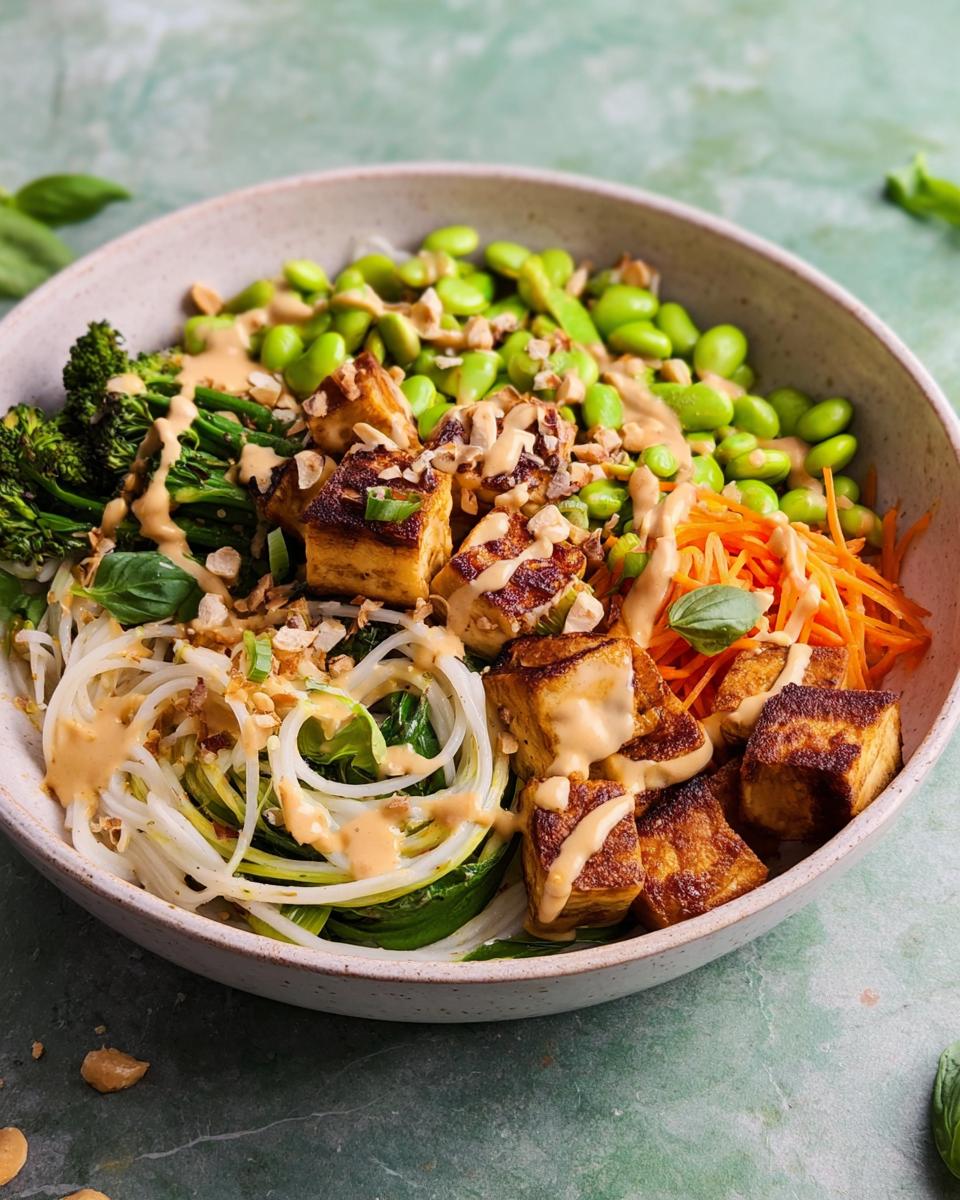
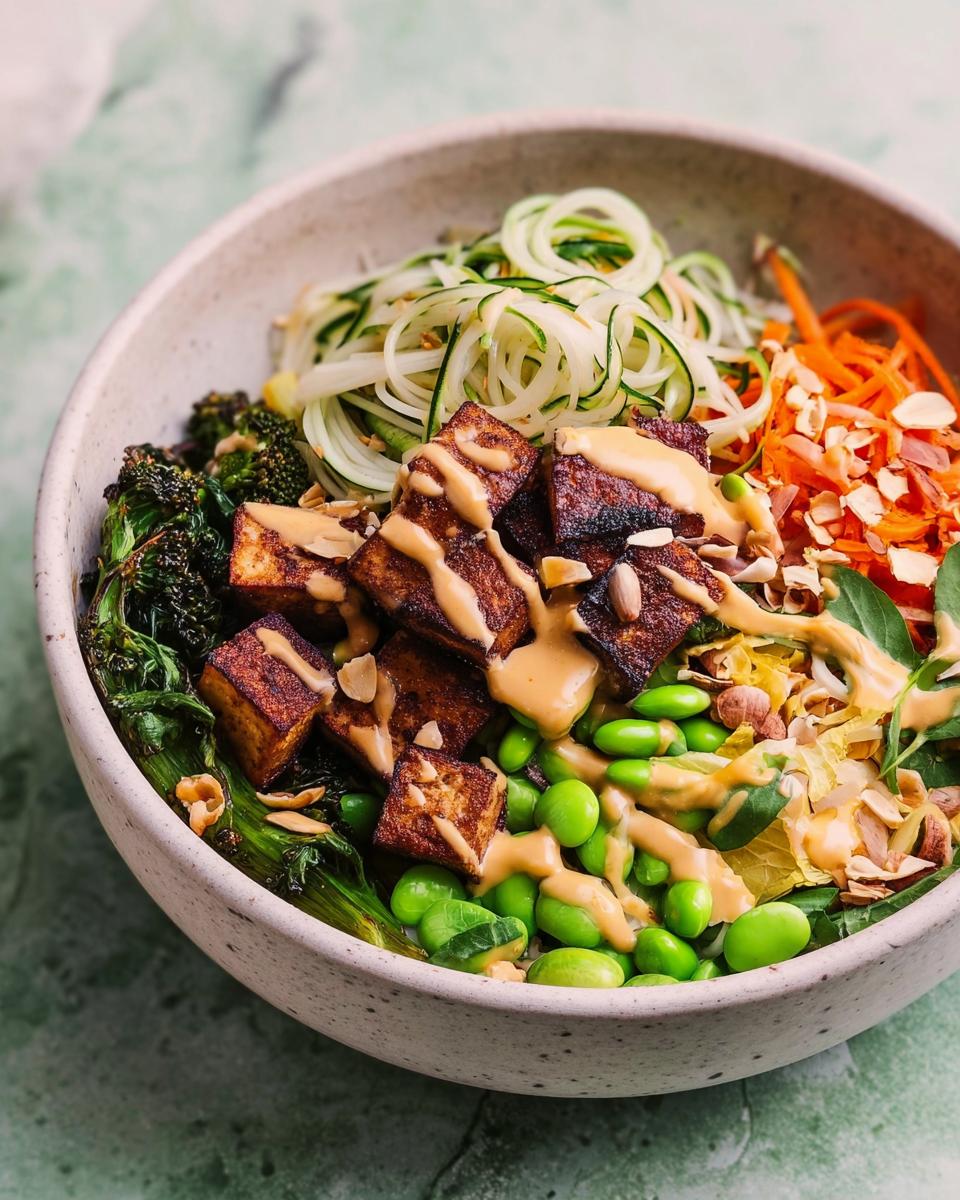
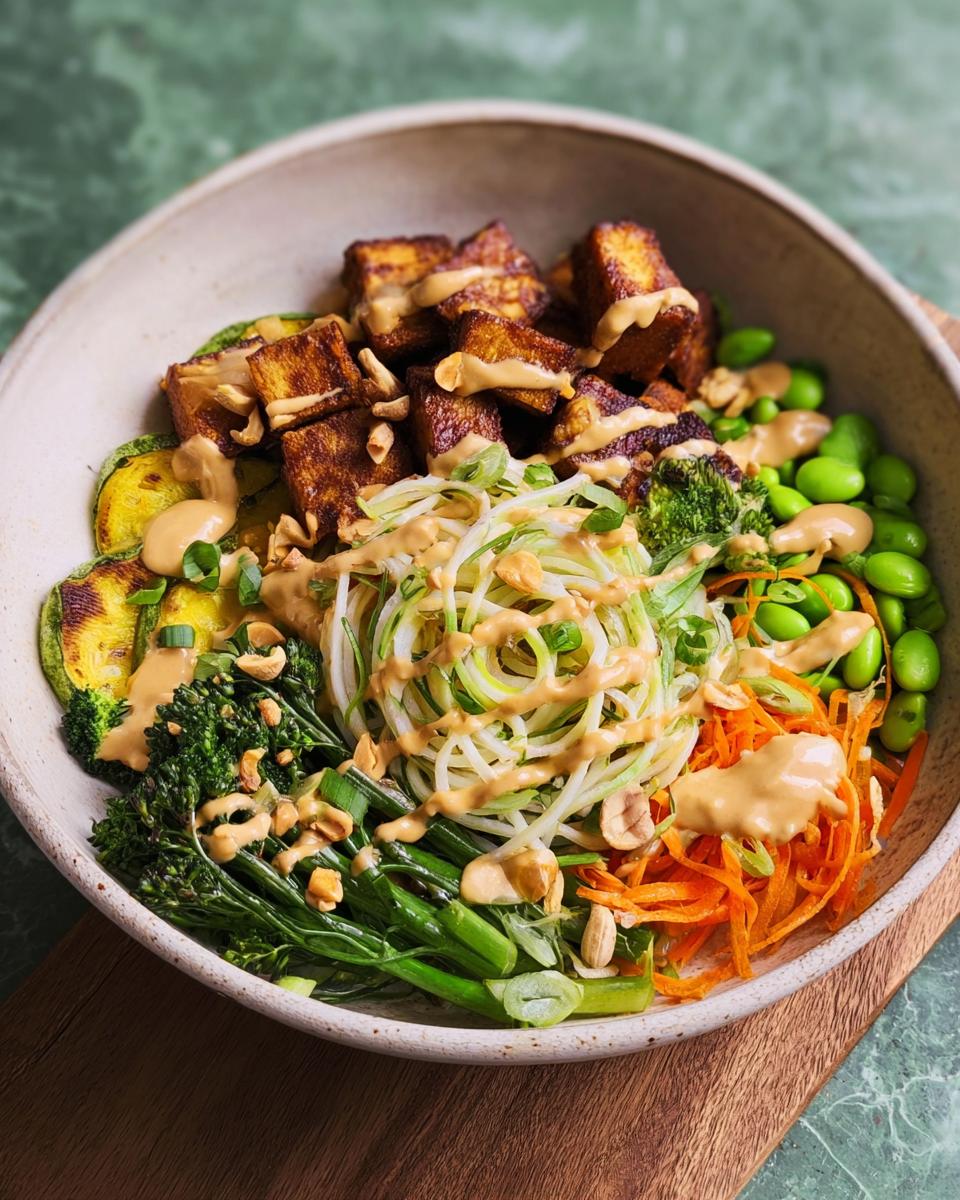
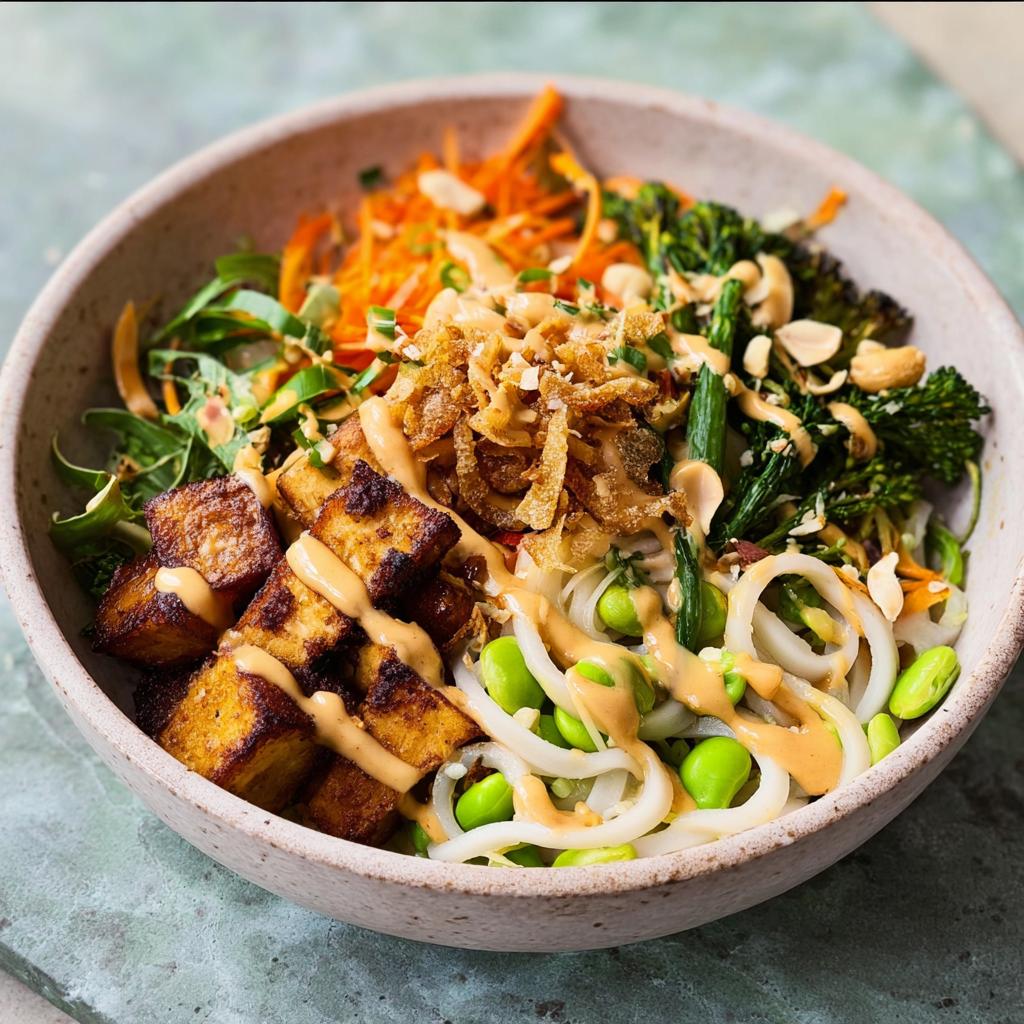
Okay, the grand finale! Grab your bowls. Divide the cooked kohlrabi noodles evenly between them. Then, artfully arrange that gorgeous roasted tofu, tender broccolini, sweet carrots, vibrant edamame, fresh basil, crunchy peanuts, sliced scallions, and those lovely coconut flakes right on top. Make it look pretty – it tastes better when it looks good, right?
Tips for Success with 20-Ingredient Rice Bowls Recipes (No Fuss)
You know, even with the easiest recipes, a couple of little tricks can make all the difference. For these 20-Ingredient Rice Bowls Recipes (No Fuss), here are some things I’ve learned that really help. First, don’t skip pressing that tofu! It makes it so much chewier and less watery when it roasts up beautifully golden. And for the veggies, tossing them with oil and seasoning *before* they hit the baking sheet ensures every bite is flavorful. If you’re prepping ahead like for those lunch boxes, keep the sauce separate until you’re ready to eat so everything stays super fresh. Remember, the goal is NO FUSS, so just roll with it!
Ingredient Notes and Substitutions for Your Rice Bowls
This recipe is pretty flexible, which is part of why I love it so much! For the tofu, pressing it is key for that nice firm texture, but if you’re really short on time, you can skip it, it’ll just be a little softer. As for the veggies, broccolini is great, but broccoli florets or even green beans work just as well! Rainbow carrots are pretty, but regular carrots are totally fine. If you don’t have kohlrabi noodles, you can use zucchini noodles, spaghetti squash, or even good old-fashioned rice (though that makes it less excitingly low-carb!). The peanut sauce is pretty forgiving too – if you can’t find tamari, regular soy sauce is a-okay. And for more ideas on eating well, especially if you’re managing things like diabetes, check out this guide to gluten-free diabetic meal plans.
Frequently Asked Questions about 20-Ingredient Rice Bowls Recipes (No Fuss)
Got questions about whipping up these tasty bowls? I’ve got you covered! These 20-Ingredient Rice Bowls Recipes (No Fuss) are super forgiving, but here are a few common queries:
Can I make the peanut sauce ahead of time?
Oh yes, absolutely! The peanut sauce keeps beautifully in the fridge for up to 3-4 days in an airtight container. Just give it a good stir or add a splash of water if it thickens up too much before serving. If you ever need help with recipes, don’t hesitate to reach out via our contact page!
What other vegetables work well in these bowls?
So many options! Feel free to toss in bell peppers, snap peas, edamame (if you didn’t already!), shredded cabbage, or even some roasted sweet potato. Whatever you have on hand works great!
Is this recipe suitable for meal prep?
Definitely! This is a meal prep star. Cook your noodles, roast your tofu and veggies, and make the sauce ahead of time. Keep them stored separately in the fridge and assemble your bowls when you’re ready to eat for a quick, healthy dinner.
Serving and Storing Your Delicious Rice Bowls
These bowls are best served immediately while everything is fresh and vibrant! Gently drizzle that amazing peanut sauce all over the top. If you happen to have leftovers (though I doubt it!), store the components in separate airtight containers in the fridge for up to 3 days. To reheat, gently warm the tofu and veggies, cook the noodles if needed, and then assemble and add fresh sauce. For more amazing meal ideas, check out this recipe for easy Tuscan chicken!
Estimated Nutritional Information
While exact numbers can wiggle around depending on the brands you use and how much sauce you *really* load up on (no judgment here!), you’re looking at roughly 500-650 calories per bowl. That’s with a good amount of healthy fats, around 25-35g of fat, a solid dose of plant-based protein at about 20-30g, and a net of 30-45g of carbs. It’s a pretty balanced meal, if I do say so myself!
Share Your Creations!
Okay, now it’s YOUR turn to shine! I would absolutely LOVE to hear how your 20-Ingredient Rice Bowls Recipes (No Fuss) turned out. Did you try any fun ingredient swaps? Did the peanut sauce become your new obsession? Drop a comment below, give the recipe a rating if you loved it, or tag me in your amazing photos on social media! You can learn more about me and our cooking adventures over on the About page!
20-Ingredient Rice Bowls Recipes (No Fuss)
Ingredients
Equipment
Method
- Make the peanut sauce: Combine ginger and garlic in a blender. Blend until finely minced. Add peanut butter, soy sauce, rice vinegar, water, maple syrup, and sesame oil. Blend until smooth, adding more water by the tablespoon if needed to reach desired consistency.
- Prepare the tofu: In a bowl, toss the cubed tofu with soy sauce, salt, and pepper. Spread on a baking sheet.
- Roast the vegetables: Toss the broccolini and carrots with avocado oil, salt, and pepper. Add to the baking sheet with the tofu. Roast at 400°F (200°C) for 20-25 minutes, or until vegetables are tender and tofu is golden brown.
- Cook the kohlrabi noodles according to package directions or your preferred method (this may involve a quick sauté or steaming). This step typically takes about 10 minutes.
- Assemble the bowls: Divide the kohlrabi noodles among four bowls. Top with roasted tofu, broccolini, carrots, edamame, basil, peanuts, scallions, and coconut flakes.
- Drizzle generously with the peanut sauce before serving.
Notes
Tried this recipe?
Let us know how it was!
Master Recipe Testing Coordinator
Honestly? I got into recipe testing because I was tired of expensive failures. My gluten sensitivity meant constantly modifying recipes, only to watch them fall apart in my kitchen. After earning my food science degree, I realized the problem wasn’t the recipes – it was the lack of real-world testing.
So I built what became our signature system: every recipe gets tested by fifteen different home cooks. Grandmother with a 1970s oven? Check. College student with only a hot plate? Double check. Denver altitude versus Miami humidity? We’ve got it covered.
My food science background explains why certain substitutions work, but my gluten sensitivity keeps it real. I know the disappointment of reading “just like the original” and ending up with wasted ingredients and ruined dinner plans.
Our network now includes over 200 volunteer testers across different regions, skill levels, and dietary needs. I track everything – ingredient availability, altitude performance, equipment variations – until each recipe achieves “foolproof reliability.”
Leading our social media community is equally rewarding. Whether troubleshooting a recipe gone wrong or celebrating someone’s first successful gluten-free bread, I’m there for every step of their journey.
When I’m not coordinating test kitchens, I’m hiking with Scout, my border collie mix, mentally planning the next round of testing protocols. Reliable recipes aren’t just nice to have – they’re essential for sustainable dietary change.